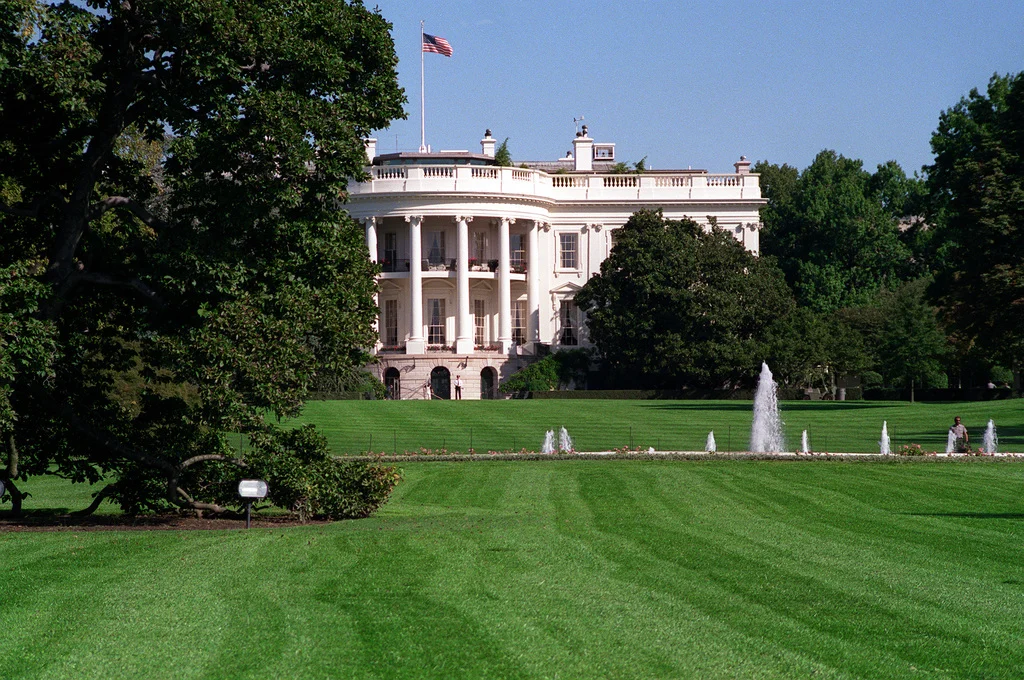
Moments before Charles Oliveira and Max Holloway, two legends of MMA, stepped onto the canvas to fight for the BMF belt, UFC president Dana White announced the Freedom Fights 250 event happening on June 14th, later this year, at the White House.
While the UFC’s new partnership with Paramount has brought a lot more money to the sport and delivered some of the promotion’s biggest television and streaming numbers in years, marking a surge in fan interest, this event was widely expected to surpass these highs and blow recent events out of the water.
But instead, reactions suggest it has struggled to match the unprecedented amount of hype leading up to it.
The six-fight card was immediately deemed underwhelming by MMA-centered content-creating analysts like Ariel Helwani and The MMA Guru, who, on his channel, exclaimed that the UFC “can do better than this.” Fans agreed that the card is not living up to the “the greatest fight card ever assembled” hype White gave it, and didn’t have “8-9 title fights” as President Trump predicted.
Apart from the two noteworthy bouts of undefeated Ilia Topuria defending his Lightweight belt against Interim Champion Justin Gaethje, and superstar Alex Pereira moving up to Heavyweight to face the controversial Ciryl Gane for the Interim Belt, reactions note the card being noticeably absent of big names.
Other UFC fighters, both former and current, reacted to the fight list with mixed reviews, with some being excited for the top fights, but a majority showing cynicism or indifference.
Demetrious Johnson, a UFC Hall of Famer and legend of the sport, had a video breaking down the card, and simply described the card as “disappointing,” claiming that “it feels like it’s missing something.”
But a part of skeptical fans see a problem beyond this card’s lack of star power and the misleading publicity leading up to the fight.
For some critics, the event represents something much bigger than a couple of fights on a late Saturday night. It highlights the ever-growing relationship between the UFC and right-wing politics.
What’s happening with this event reflects a shift in how the UFC functions within American culture.
With a huge part of conservatives adopting the promotion and the sport of MMA altogether, Conservative-leaning fighters that have aligned themselves with President Trump, like Sean Strickland, Derrick Lewis, and Josh Hokit, have remained prominently featured in the UFC, despite the controversies surrounding them. With Lewis and Hokit being added to the White House card after a personal request from President Trump himself.
Former fighter Kevin Lee claimed the reason he was cut from the promotion is that he publicly supported Bernie Sanders in 2019, alleging that Dana White and the UFC told him he was “dead in the water” shortly after the fact.
Having backing from both Dana White and President Trump, part of the UFC fanbase claims the card has turned what would normally just be a fight night into a political spectacle.
A portion of fans, however, have ignored this relationship, claiming that the UFC is its own independent organization and that this relationship between the two is merely that of friends and no true harm is being done.
But as these connections become what shape the presentation and promotion of events, fans feel the line between sports entertainment and political signaling becomes increasingly blurred.
With this in mind, Freedom Fights 250 takes on an even more important significance, hosting a fighting event in a space historically associated with the state and diplomacy.
Bringing an MMA event to the nation’s most prestigious and important building would have been unfathomable for fans just a couple of years ago, but now we’re only a couple of months away from seeing it live.
The relationship between President Trump and the UFC is nothing new; the President has been part of UFC events since the early 2000s, when he helped the organization get a jumpstart by hosting events at his Trump Taj Mahal complex.
During his first term in office, however, the relationship shifted from one of friendship and business to one with real political impact in the right-wing sphere.
The clearest moment of this came during the 2016 Republican National Convention, when White came onto the stage to introduce the at the time newly nominated presidential candidate Donald Trump.
The moment marked a turning point, publicly linking the head of the world’s largest MMA promotion with a presidential campaign that would go on to win the 2016 election and cement a tie between the UFC and American conservative politics.
Fast-forward 10 years, after countless Trump appearances at UFC events and fighters’ greetings after victories, the perception of the promotion being a part of conservative cultural identity has solidified.
Taken together, the reactions to the Freedom Fights 250 announcement reflect a wider pattern in how recent UFC events are being received and perceived.
While the promotion continues to draw strong viewership and attention, responses to fight cards are increasingly highlighting a gap between expectations and reception.
As the UFC moves through its first year under its Paramount partnership, Freedom Fights 250 stands as yet another example of how the promotion is not just being discussed in terms of fights, but also in how it presents and positions itself.