In early September, internet outages swept the northern province of Balkh, Afghanistan, as part of an effort by the Taliban to suppress “immoral activities.” By the end of the month, the outages would reach across the whole nation in a complete 48-hour blackout. Banking and financial transactions were cut off, flights cancelled, and medical services interrupted: it was a country in limbo. Caught in the crossfire alongside were young girls already barred from schools under Taliban rule. Many of these girls rely on an internet connection for a de facto education. Not long before the outages, a small group of them hoped to learn English from a woman they called their sister, thousands of miles away.
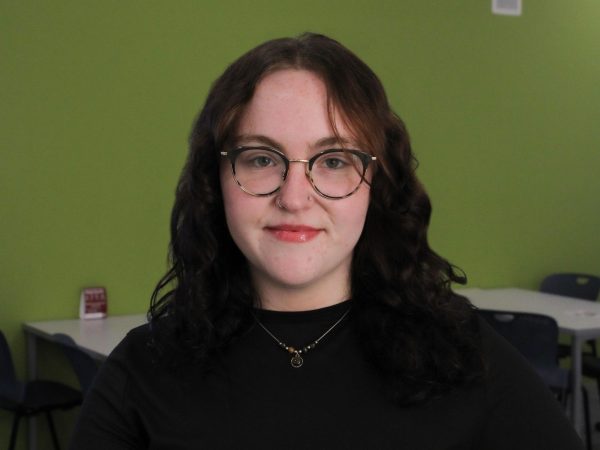
That “sister” is Dr. Amina S. Davlatshoeva. Originally from the mountains of Tajikistan, she is now settled in the farmland and forested hills of Amherst, Massachusetts, and has built a small international following for her podcast, Tabila. The show is a fusion of the Pamiri mountain language of Shughni (whose entire speaking population of a high estimate of 90,000 could fit into a large football stadium), English, and the other languages she has in her arsenal; eight, to be exact. For people like Davlatshoeva, who come from minority language communities, multilingualism is a ticket for survival.
Often, though, the constant tangled web of words, phrases, and dialects run through her mind like a marathon and leave her exhausted at the verbal finish line.
Tabila, a podcast about language and culture, covers contemporary social issues (in what she calls Shunglish) and other complex topics. These are primarily related to identity formation, mental health, digital modality and internet safety for the native Shughni community, whose language is but a ghost in the educational and professional worlds. The challenge is existential. “A language trapped in a mountain,” as Davlatshoeva refers to it, is dominated by more widely spoken tongues and has little room to evolve.

Davlatshoeva was born in pre-civil war Tajikistan, in the small town of Khorog, 7,200 feet above sea level in the Pamir Mountains, in a deep canyon nestled between cliffs. Davlatshoeva, a big fan of Lord of the Rings, compares it to the mountains Frodo Baggins walks through on his journey. There are no hills, only mountain ranges. Shughni is one of many indigenous languages spoken in the region, and was the dominant dialect in her household, rather than her mother’s native tongue, Bartangi. Bartangi and Shughni are sister dialects, but their respective speakers do not understand each other.
For Davlatshoeva, Shughni was lullabies and storytelling; it was simple, everyday conversations. The division governed her world: Shughni domestic, Tajik academic. The memorization and purely academic-based use made learning the dominant language of her home country difficult, but by third grade, Davlatshoeva could proudly call herself multilingual. By the sixth, she would earn her polyglot status.
It was nearly impossible to avoid the Russian language in a Soviet controlled territory. If Shughni was domestic, Russian was a common visitor. It was found in the children’s cartoons Davlatshoeva’s family would put on at 9 PM most nights, in popular media, and in classrooms as part of the curriculum. For a young, indigenous Pamiri girl between what seemed like three different worlds, the ability to speak four languages (which in the United States would be a perfect addition to a university application or an impressive fun fact) was as natural as learning to speak at all.
Davlatshoeva says some Tabila listeners, called Tabilians, have described her Shughni demeanor as “sisterly,” a calm voice that could lull them to sleep. That was the role she took on in her household as the eldest sibling, and she took it in stride. Her favorite part of growing up in the Pamir mountains was caring for her three younger brothers, acting as “dad’s deputy.” The man himself was a teacher, who later worked in the provincial government as head of the education department in war-torn, poverty stricken Pamir. His influence would be the guiding light of Davlatshoeva’s educational pursuits. In fact, it was he who pushed her to learn English after recognizing the shifting axis of a changing, war-torn world.
Political instability came fast, in 1991, with the collapse of the Soviet Union, and a brutal civil war that would plague Tajikistan from 1992 to 1997. Davlatshoeva was in the midst of her nursing technical education, and the academic and linguistic landscape was changing. The Tajik language became more prevalent as it was promoted in newly independent Tajikistan. For survival in this shifting world, Davlatshoeva honed her Tajik and Russian language skills. All the while, Shughni would become more marginalized and hidden in the trees of the two dominant languages that overtook her speech and community, “My own mother tongue was cornered… I hardly spoke my language outside of home walls,” she says.
An avid reader and academic, the books offered to Davlatshoeva were only in Tajik and Russian, never in Shughni. When she started at Khorog State University to earn a degree in biology, the country was deep in poverty, and the library would not allow books to be checked out. Davlatshoeva recounts taking turns with friends in her classes, each writing 25 pages from their chemistry textbook. The students would trudge to class to glass covered classrooms with no electricity.
It was here that Davlatshoeva began to understand her position as a woman in higher education. She recalls crossing a bridge on her way to class, the temperature just as cold as the coldest days in New England, and the ground beneath them iced over and slippery. She says some of the men would laugh at the women for falling down, catcall them, and make threats.
Education for women has been a contentious subject following the rise of the Taliban. There were fears of Western ideas leading the girls astray, and a stigma around leaving your home for education. Davlatshoeva herself received comments from members of her own community, though her educator father stood behind her, encouraged her, and motivated her to have her own opinion and reasoning and aim higher. A father so passionate about his daughter’s education was not the norm, says Davlatshoeva. Especially when it came to learning English, the language that would open new doors for her in the professional world.
Davlatshoeva was 23 and had finished undergrad at Khorog State when the opportunity to learn English presented itself. Though she was a high achiever in school, the English language was something she could not fully grasp; at the time, it was of little interest to her. In pursuing her biology degree, Latin became a focus as a way to grasp more of the science. English was not on the radar. But with Afghanistan’s war with the United States looming on the horizon, her father told her she had better start learning. Every night, washing the dishes by candlelight, she would practice her verbiage.
Though it did not stick until one day in particular, a day when the smell of fresh bread overtook every inch of the home. Due to the extreme poverty that hit Khorog post-war, the poverty she had been feeling since her early school days, food and grocery stores were scarce. The family mostly relied on her mother’s fresh-baked bread, which they would also offer to the neighbors.
One of them was a Canadian woman who had come to Khorog to teach computer language as a volunteer. Davlatshoeva followed her usual routine of the bread drop-off: bring it to the door, drop it off, say nothing, and leave. Though sometime after Davlatshoeva went, the woman had left her home and fallen into a nearby well, injuring herself.
One of Davlatshoeva’s younger brothers happened upon the scene and quickly went back to alert his sister. The nursing instincts she picked up over years of tending to her brothers and her technical education kicked in, and she spent the evening and night dressing the Canadian woman’s wounds, disinfecting them, and providing first aid. Grateful, she offered Davlatshoeva an opportunity she had initially refused: she would sponsor Davlatshoeva’s trip to Ontario to learn English at an English learning center.
Her father pushed her to go; it was a life-changing opportunity that few from her background were given. “She saw potential in me,” Davlatshoeva says.
With English under her belt, she went for her master’s at Aga Khan University in Pakistan. Afterward, she worked on many international humanitarian aid projects in Afghanistan. There, she began her dissertation on female voices in health issues. She picked the topic after her graduate research textbook suggested running your dissertation ideas by your grandmother. At the time, she was also considering picking a topic related to corruption. But her grandmother talked her back home into the Pamir mountains, and pushed her to cover female voices and identity.
Her time in Pakistan led her to Urdu and Farsi. The campus was isolated, and in the aftermath of September 11th, classes were all held inside. She recalls visiting home during summer break and having a conversation with a cousin about her studies in Pakistan.
“What are the people like?” Her cousin had asked, and Davlatshoeva realized she did not know. “How do you visit all these different countries and not know anything about the people?”
That was when Davlatshoeva’s language arsenal had expanded to six, and eventually seven. She focused on learning the conversational manner of Urdu and Farsi, as opposed to the academic, almost clinical way, “It’s part of the job, that I want to connect with people,” she says, “I use language as a medium to talk with them.” While working on these aid projects, eventually with the UN and UNICEF, Davlatshoeva became concerned with the voices of the actual beneficiaries, making a point of building those connections. Eventually, she got to thinking about the unseen minorities, the proverbial ten indigenous girls in a village that fly under the radar of these aid projects. The people on the “margin of the margin,” as she refers to them.
As Davlatshoeva traveled through Pakistan and eventually to Kabul, Afghanistan on these projects, teaching classes, the Shughni community back home continued to dwindle. Losing their language began to weigh heavily; Davlatshoeva says the cultural environment had become hostile in a way she did not recognize. Such as their cultural tradition of how to give condolences during a grieving period. She explains that what was once a simple, quick visit and an offer of kind words has become plagued by gossip and the “politicization of procedures”: How long do you stay? How much do you say? She says a similar contention has found its way into Shughni wedding ceremonies, that they now feature excessive drinking, name-calling, and debate over what the women can and cannot wear. The vulgarity and overall demeanor was unfamiliar.
Davlatshoeva noticed an uptick in violence against women, something she felt was unheard of in Shughni culture, considered undignified. Constantly in survival mode, volatility rears its head in what she views as not only a consequence of losing the language, but also an apparent mental health issue that spills over into the digital world.
According to UMass Linguist Faruk Akkus, who specializes in endangered Indo-Aryan languages, when you lose a language, what you are really losing is the culture. “Language preservation is an enterprise that requires the collaboration of many shareholders,” says Akkus. It is a process that must take place over generations, though in recent times, Shughni elders have encouraged their children to learn the dominant languages. Shughni usage has been reduced to simply private conversations. According to Akkus, the best way to preserve a language is to do the opposite: keep speaking it and pass it down. Children are the primary key to language preservation.
A study from the University of Badakhshan into the deterioration of Shughni in the Pamiri communities of Afghanistan found that the younger generations are trending toward a decline, replacing Shughni words with those from other languages. The study also notes that another danger is underdocumentation. Few academics have launched research projects to document the Shughni language. The last large-scale project began all the way back in 2007, at the University of Kentucky.
That year, Professor of Linguistics Gregory Stump was teaching a field methods course. His philosophy was this: teach students about languages through native speakers as the primary source. And Stump was after languages that most people in the West would have never heard of.
That semester, the University brought scholars from post-Soviet countries as part of a program to connect them with experts in their fields. The University welcomed native Shughni speaker, Gulnoro Mirzovafoeva. Given Stump’s affinity for the obscure, the campus coordinator connected the two. His interest piqued, Stump founded the University of Kentucky’s Shughni Grammar Project.
The team included other professors of linguistics at UKY, like the now Vice Provost of the University of Texas, Andrew Hippisley, and colleagues of Mirzovafoeva from Khorog State University in Tajikistan, the same place Davlatshoeva finished her undergrad. The Shughni scholars were very excited to work on the project; they emphasized the dire situation of Shughni’s survival. Hippisley says he and Stump spent that summer running a workshop with them at UKY, focusing not on theory, but organic conversation. Speaking in English, Russian, and Shughni, back and forth, through the line again and again. It was the same method Stump found most effective for his students.
The Shughni researchers attended the daily two-hour workshops at UKY for eight weeks. In that time, the linguist’s goal became clear: to create a comprehensive English-language dictionary and grammar of the Shughni language, and hopefully bring it back from the brink of endangerment.
Their research also found that the landscape of the Pamiri mountains shaped the language itself. Direction prepositions act distinctly as a vestige of them. Instead of using certain inflections like “go down” or “go away” to describe direction, in Shughni, they phrase it as “move up a vertical plane” or “move down a vertical plane,” says Hippisley, like a topographical map woven into the grammar. Davlatshoeva notes that when she speaks Shughni, her mind feels like it is up in the mountains, no matter where she is on Earth.
The project eventually fell flat as the Shughni researchers returned to Tajikistan, funding dried up, and Stump and Hippisley’s research interests broadened. Speaking on the topic almost two decades later, though, Hippisley excitedly sifts through his office to find his old Shughni materials as he speaks on it. Though he now does administrative work as Vice Provost, he says that if he were ever to return to research, this is the project he would come back to.

Upon finishing her master’s, Davlatshoeva would find work in education services. In 2005, she would join the USAID-supported Learning for Life project, which brought health education and midwifery curriculum to vulnerable Afghan communities amid the war. Given her nursing background and affinity for women’s education, it fit like a glove, “I loved working on that project,” says Davlatshoeva, “I had a command of the topic.” When the program shut down suddenly in 2006, Davlatshoeva was unsure of her next step. When her boss recommended the doctorate program at UMass Amherst, she was off to New England.
That same year, similar to Mirzovafoeva at UKY, Davlatshoeva would earn some money on the side helping a group of UMass linguistics students complete a project about Shughni. Her favorite part was the students asking her about words, phrases, and the way she spoke. It was a thrilling experience, “I’ve never been in a situation where someone asks me about my language structure.”
Davlatshoeva had completed her doctorate, and spent some time working in Abu Dhabi where she honed her Arabic. In 2021, Learning for Life relaunched in the midst of the pandemic, and Davlatshoeva held a high-ranking consultancy position she attributed solely to her multilingual skills. The program ended once again after the Taliban banned Afghan women and girls from public life, including schools, higher education, and midwifery. Not long after, she faced the grief that came with losing her father. Feeling uncertain, she found herself back in Amherst, which she now considers her second home.
Grappling with the grief in her personal life, and professionally for Afghan women, Davlatshoeva became disheartened at the idea of losing it all, including her language: “When you lose your home, you lose your land, the place you go lamenting, to calm yourself down…” she explains, “the identity of that is embedded in your language.” She notes how women in the delivery room, in their rawest moments, will scream in their mother tongue.
Leaning into her creative side, Davlatshoeva created the Tabila Podcast to begin preserving that most basic part of herself. A space she says could only exist in New England, where she can express herself freely and simply, be. A language that was not afforded an educational or professional space was given one by her. Through Tabila, Davlatshoeva records the language and its culture by association, as a form of preservation. Her podcast has covered faith based grieving, and teaching through music. One episode delved into the neuroscience of her multilingualism. She does not find the split between private conversations and those about complex topics to be necessary. “It’s indigenous investment,” says Davlatshoeva.
Her heart never left women’s pursuit of education, though. Aside from Tabila, she teaches the occasional class at an Afghan Refugee Assimilation center in Springfield. Recently, she taught a class on feminine hygiene. Very similar to the courses she taught in Kabul during the Learning for Life program in Afghanistan. In the small room decorated with traditional carpets and pillows for the women to sit on, the smell of incense reached through every corner, pleasantly enveloping it all. Davlatshoeva, at the head of them, opened a sanitary pad and was met with a cacophony of laughs from the women in the room, “That’s where the nerve of a culture is,” she says.
Davlatshoeva can only do so much herself to preserve her language. She finds most of her listeners are much like her, a single Shughni dot in a community of non-speakers. She recalls one listener who worked on a cruise ship to Antarctica out of Dubai, and another studying alone in China. She becomes most excited hearing from her mountain listeners that tune in through mp3 files, warmth permeating her tone as she spoke about a father and son who listen together. Her podcast is for them, a space to come home to their native language and maybe even learn another, like English. Tabila celebrated its two year anniversary this past December 13th.
The six Afghan girls she teaches English, aged 16-19, now out of the internet outages, log on once a week for a WhatsApp call. On these calls, Davlatshoeva tries to impart to them what her father imparted to her: a way to speak in a world that deems them voiceless.
An earlier version of this article misstated that Dr. Amina Davlatshoeva previously worked in Dubai. She previously worked in Abu Dhabi.