A couple of weeks ago, as I was scrolling through YikYak, I came across a post asking users how they felt about University of Massachusetts Amherst’s campus architecture. A poll showed students being perfectly divided into two groups: one appreciating the architecture and the other seeing it as a negative aspect of campus. In other words, 50% of respondents dislike our campus’ architecture, and the other 50% are on the right side of history.
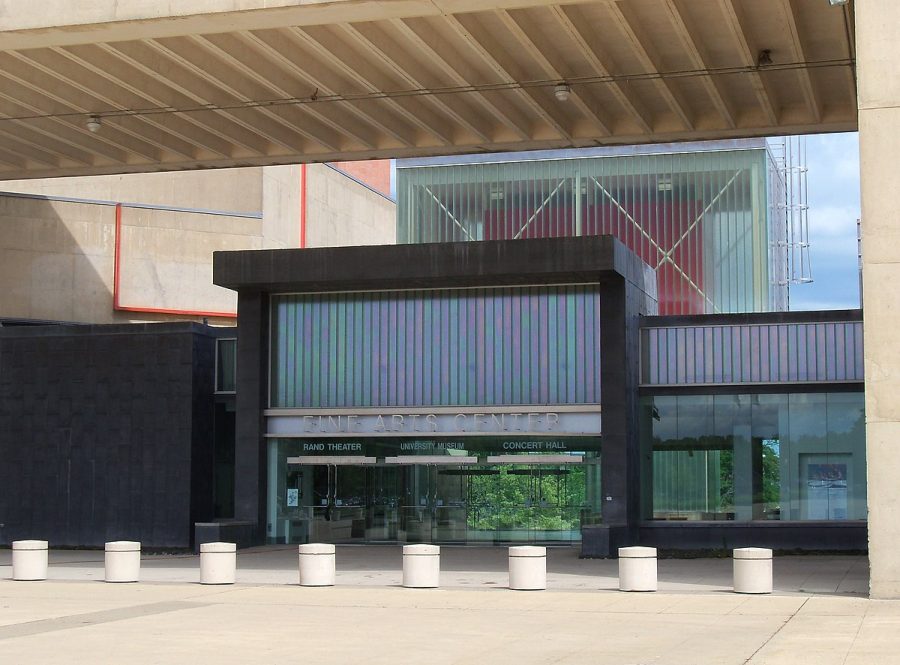
UMass students need to stop looking at the campus’ brutalist buildings, like Herter Hall, the W. E. B. Du Bois Library, and the UMass Hotel, as old eyesores ruining campus, and recognize that they are the boldest parts of the school and that the university’s architectural legacy is brutalist.
But why is it that there isn’t a consensus on the value of UMass’ brutalist architecture? What is it about huge concrete buildings that makes some people either hate them or love them?
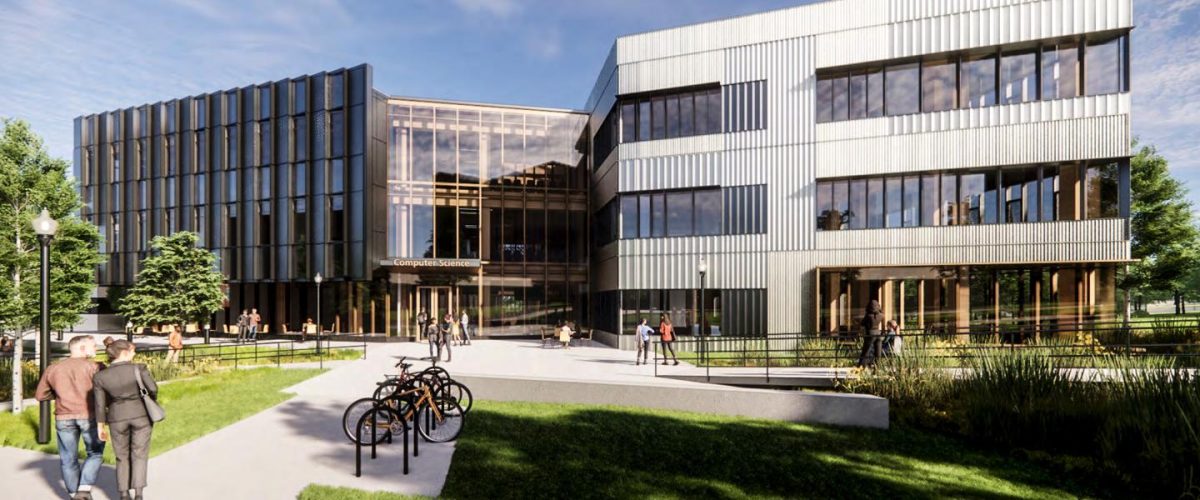
Some students seem to be partial to newer additions to campus, like Isenberg School of Management and the Design Building, seeing them as more valuable simply because they are more expensive and “of the moment.”
Buildings like the UMass Hotel and Conference Center and the Arts Center are much bigger and more imposing than they need to be, but that is where their charm comes from. While the brutalist structures stand out, some other campus buildings seem like copies of copies, generic, cookie-cutter type buildings that every other major campus in America has.
Brutalism has been misunderstood ever since it arrived on campus. From the mid-60s to the late 70s, 27 brutalist buildings on campus were built, and they drew immediate attention and were immediately criticized. Not everyone loved the changes that were happening on campus, as they saw them as not fitting the campus.
Brutalism was an avant-garde concept from its very beginning, with architects wanting to build the infrastructures of the future, dreaming of utopian places with big concrete buildings.
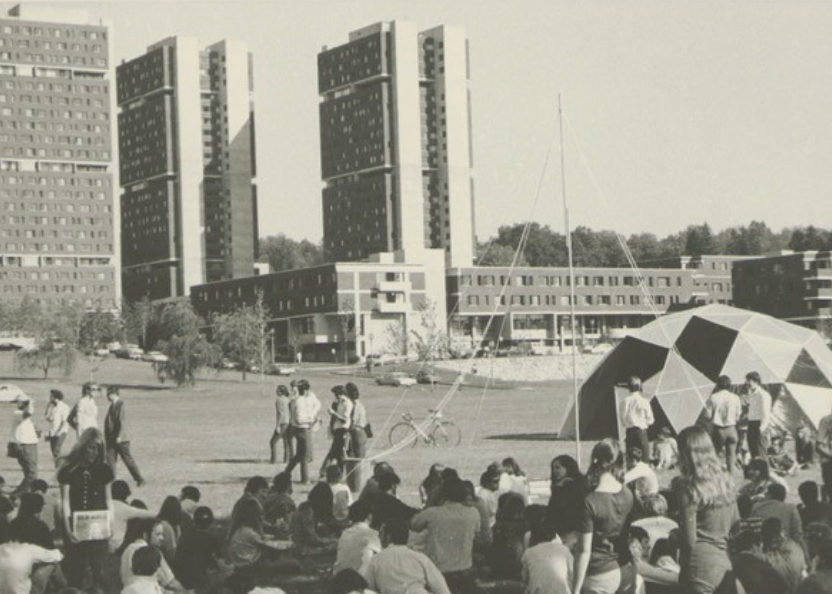
Notable architects, including but not limited to Marcel Breuer and Hugh Stubbins, were called in to design buildings like the Campus Center and Southwest Residential Area, respectively. The changes in architectural vision reflected a change in the direction the university was taking.
Both of the aforementioned architects drew inspiration from Le Corbusier, who, despite not working on the UMass campus himself, is seen as the pioneer of the brutalist movement, showing the importance of UMass’ architecture to the rest of the world.
At the time, UMass was expanding rapidly from an agricultural college in a small town to a major public research institution that drew students from all over the world.
The school celebrated these buildings at the beginning of their existence in the 1960s, using them as symbols of this growth and change.
A brochure entitled Standing in Silhouette: The Southwest Dormitories at UMass from 2021 gathered promotional images from the era that depicted this architecture alongside carefully staged student life, positioning the dormitories “as an exciting, modern, but normative place to live.”
Organizations like UMassBRUT not only serve to appreciate brutalism and restore public opinion to what it once was, but are also actively “attempting to reshape perceptions of Brutalist architecture to advocate for the conservation and renovation of these historic and internationally significant buildings.”
But despite these recent efforts to change the consensus, students still feel the buildings stick out like a sore thumb, limiting the appreciation our architecture should be getting.
A couple of weeks ago, the OneBuzzUMass page held a vote on their stories for followers to suggest what the ugliest buildings on campus are. Later in the day, the page shared the results.
Being dominated by brutalist architecture, the poll shows a common trend among students: when asked to point to the ugliest parts of campus, most fingers land on brutalism, with buildings like Herter, Tobin, and “all of Southwest” taking the spotlight.
The critique here almost always stops at aesthetics. People walk by these buildings every day but refuse to engage with them on a deeper level. They see bold concrete and sharp edges and dismiss them just because they do not fit into the narrow mold of what a “pretty building” should look like.
On the other hand, when they asked students to vote on which of the campus’ buildings are prettiest, respondents overwhelmingly chose newer, high-end buildings.
This reaction from followers comes from a common misconception that brutalism is equal to cold or ugly. The name comes from “béton brut,” meaning raw concrete, not brutal in the sense that it is violent. The word ends up getting lost in translation between French and English, since it has nothing to do with the word brutality. The way we have interpreted it has caused great harm to the movement.
As Ludmilla Pavlova-Gillham, a campus planner and architect involved with UMassBRUT, noted, these buildings were designed to “do more with less.” Architects used form and structure to serve collective and communal purposes rather than just what they thought would look best. The lack of ornamentation is not an accident, but rather a purposeful move to avoid excess. These formal choices reflect a certain humility that feels uniquely suited for public, democratic spaces like a college campus.
Much of this contrast can be explained by what the university itself denotes as pretty and worthy of students’ attention.
This is exacerbated when newer and more expensive buildings are introduced to campus and immediately featured in every piece of campus advertising. The Du Bois Library is still the most prominent one, but the original brutalist works have been pushed to the side to make way for buildings like the $62 million Isenberg and the $52 million Design Building.
Pavlova-Gillham also noted how the brutalist buildings used “reinforced concrete for structural strength and formal plasticity, as well as for economic efficiency,” which underscores a major shift:
Our campus’ older buildings prioritized economically rational, functional design and smart approaches, while the modern ones cost millions of dollars more, but for no good reason other than visual impact.
We have to overcome these limitations in order to fully understand and appreciate the art of brutalism on our campus. These buildings are what make UMass what it is today and what it will continue to be for the next decades, a hub for innovation and artistic revolution.
With more and more changes to campus every semester, the older buildings get left in the past and are slowly stripped of their relevance to our school’s history.
Losing touch with this aspect of UMass history is losing touch with the school itself. Every big school in the U.S. has contemporary glass and metal buildings; they are the most basic buildings a school can have.
Our brutalist legacy leaves an impression on all students who visit here, while other campuses offer the same clinical environments, becoming indistinguishable from one another.
If UMass leaves its brutalist history in the past, it trades a one-of-a-kind campus identity for the same corporate-like buildings everyone else has.